





















Understanding Concepts and Core Elements
The category of battery forklift toys sits at the intersection of play and practical learning. At its core, a battery-powered forklift toy is a small, mobile machine designed to mimic the lifting and transporting actions of a real forklift, but scaled for safe, interactive play or educational use. These toys typically integrate a rechargeable battery, a drive system, a lifting mechanism, and some form of control—whether a simple infrared remote, a Bluetooth-enabled app, or a combination of both. Downloads and companion apps add layers of content: additional scenarios, guided tasks, tutorials, and sometimes augmented reality overlays that help children and adults explore warehouse-like workflows in a controlled environment.
Structure and core elements matter here because a downloadable file or app is not merely “extra content.” It can change how a toy behaves, what kinds of tasks it supports, and how safe or educational the experience is. The hardware part—battery type, charging interface, motor strength, lifting height, and stability—sets the ceiling for what software can realistically simulate or guide. The software part—firmware updates, app compatibility, control latency, and content libraries—determines how reliably a user can download, install, and use new tasks or scenarios. To navigate this space well, you should understand the synergy between hardware and software, and how each content package becomes a scaffold for learning, play, or skill-building.
From a practical perspective, the downloading angle is often a friction point. Users want quick access to files or apps that work with their specific toy model. They also want clarity about what the download will do: will it unlock new missions, replace a failed screen, or guide maintenance steps? The simplest path to clarity is a tight mental map: know the model or product line, confirm the compatibility of the download, and verify the source. In this article, we’ll build that map step by step and align it with real-world usage. For readers who are curious about how this topic fits into broader product ecosystems, you can explore related resources as you go along. For example, when considering maintenance and parts, you may consult the tire and battery resources from battery forklift tyre download or the replacement battery guides in replacement battery for toyota forklift download. These references illustrate how download content often scales across components, not just software.
In real use, a downloader’s pain points often surface early: uncertainty about which file is right for your exact toy version, concern over safety and malware, and the challenge of matching the download to a specific play or learning goal. To visualize this, imagine a parent opening a battery hatch and hunting for a compatible file on a tablet. The moment cries out for clear signals: “This file is compatible with your model,” “This content is age-appropriate,” and “This download comes from an official source.” The path from curiosity to action requires a restrained, methodical approach—identify model details, confirm compatibility, and then proceed with the download in a safe, controlled environment.
To guide you, this section lays the groundwork for how to think about concept, core elements, and the initial decision-making steps. It is not merely about finding a file; it’s about understanding how that file integrates with the toy’s physical and interactive fabric. The aim is to build a stable knowledge base that you can scale across different brands or future toy lines without guessing. The approach is practical: what you can do with the toy today, what you can plan for tomorrow, and how to distinguish reliable content from risky downloads.
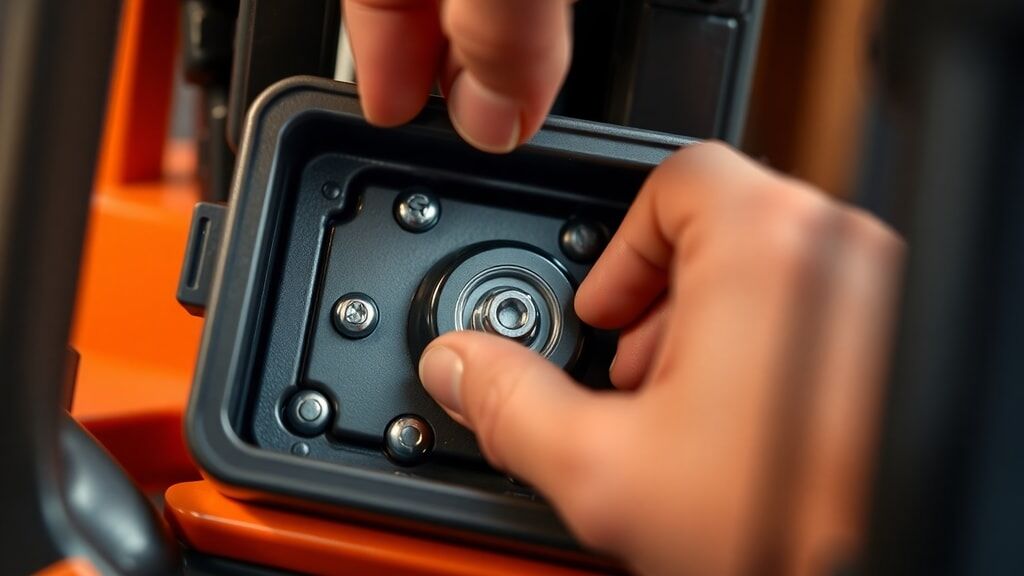
Action note: If you hold a specific model in hand, flip it over and locate the model number, battery type, and any serial identifiers. This small step makes the rest of the process smoother and reduces the chance of downloading incompatible content. For readers seeking deeper technical context, see how the same design principles apply in both consumer toys and light industrial simulators in related discussions. And for those who want to understand the broader ecosystem of downloadable toy content, you can explore the linked references embedded here.
Image prompt:
Mechanism and Working Principles
Battery forklift toys operate through a careful blend of energy storage, mechanical leverage, and electronic control. On the hardware side, a compact DC motor or geared motor translates electrical energy from the battery into rotary motion that drives wheels and lifts the fork mechanism. The lifting action is typically achieved with a small winch or scissor-like linkage, designed to mimic the real vehicle’s lifting arc while keeping the motion smooth and safe for small hands. A properly sized battery—often a Li-ion or NiMH pack—supplies power for a given duration, while a charging system ensures that the toy can be revived quickly after a session.
The software or controller side governs how the toy responds to input. If you’re using a remote or a Bluetooth-connected app, latency and control responsiveness become important quality signals. A well-tuned controller aligns the user’s commands with the motor’s action, producing predictable lift, tilt, and move behaviors. Some downloads add content that orchestrates pre-programmed tasks, such as stacking blocks or following a simulated warehouse route. In these cases, the content acts as a script for the toy’s physics engine, guiding simulated scenarios, timing, and scoring.
A practical way to think about it is to split the system into three layers: hardware, control interface, and content. The hardware layer is the physical forklift: chassis, wheels, drive train, battery port, lift mechanism. The control interface layer is the way you issue moves to the toy: a handheld controller, a phone app, or a voice-assisted command. The content layer is the downloaded tasks, tutorials, or AR overlays that expand what the toy can do beyond its out-of-the-box capabilities.
From a safety perspective, the core principles are straightforward. The toy should remain stable under typical play loads, the battery should remain cool during charging, and the control system should prevent unexpected jerks or over-extensions that could pinch fingers. When you download new content, test it in a controlled environment first—preferably on a clean surface away from water, pets, or clutter. If the content modifies behavior (for example, increasing lift force or changing speed), verify that those changes stay within safe operating ranges for your child’s age.
Action note: When you inspect a toy, take a moment to remove the battery cover and visually inspect the terminals for corrosion or loose connectors. If you’re downloading content, keep a copy of the original firmware or content package so you can revert if needed. For broader insights on how these principles translate into real-world practice, you may refer to the detailed comparisons across different content ecosystems in linked resources.
Image prompt:
Feature Identification & Evaluation Criteria
Selecting a battery forklift toy and its downloadable content boils down to a set of clear criteria. Start with compatibility: confirm the model family and the exact product variant. Ask whether the download targets firmware, content packs, or companion apps, and verify the supported platforms (iOS, Android, Windows, or dedicated hardware). Compatibility isn’t just about file type; it’s about ensuring the content can run with minimal latency, as lag can spoil the learning flow or playful immersion.
Next, assess the content quality and scope. A strong library will offer a range of tasks that align with different skill levels, from simple lift-and-stack exercises to more complex operational simulations that require planning, sequence memory, and spatial reasoning. Look for content that provides practical context—warehouse layouts, load stability scenarios, and safety checklists—rather than abstract puzzles. A robust content suite also documents the learning outcomes and includes tutorials or guided steps so caregivers or educators can lead sessions with confidence.
Battery considerations are equally important. Battery life, charging time, and the ease of swapping packs define how long a session can last and how often it needs recharging. If you’re buying as part of a learning kit, confirm that you’re getting a battery type that’s safe for kids, with the appropriate protection features and a charger that meets local safety standards. When possible, measure actual play time in a typical session and compare it with the promised run-time from the vendor; modest discrepancies are common, but large gaps warrant closer inspection or a different product.
Control fidelity matters, too. The drive system should respond consistently to inputs, without abrupt changes that could startle users or disrupt intricate tasks. If the download introduces new tasks or scenarios, test them under typical household lighting and ambient noise conditions because some peripherals rely on stable Bluetooth connections or reliable app performance. In practice, many families find value in content that includes a “practice mode” for newbies and a “challenge mode” for more advanced users, which helps accommodate learners at different paces.
As you explore content options, think of it as a layered decision: hardware quality first, control responsiveness second, and content richness third. It’s possible to have a terrific physical toy with decent control, but weak or confusing downloadable content can undermine the entire experience. Conversely, stellar content with a finicky controller or fragile hardware can frustrate users and shorten engagement. The sweet spot is when hardware durability, intuitive control, and meaningful content converge.
To anchor this guidance, consider practical references that illustrate how downloads expand capabilities without compromising safety or reliability. For example, the tire and battery resources discussed in battery forklift tyre download demonstrate how component-specific content can complement overall product functionality. When you’re ready to refresh power or maintenance-related content, the broader set of guidelines in replacement battery for toyota forklift download shows how to align downloadable material with hardware needs. Also, if you’re looking at charging solutions or power management for Toyota-based toy forklifts, the download hub described in battery charger for toyota forklift download illustrates how content often intersects with maintenance workflows.
Action note: When evaluating a download, perform a quick in-hand check: open the file or app, confirm version and compatibility notes, and run a short guided task—lift a lightweight load, move laterally, and return to base. If something feels off, revert to the default configuration and re-attempt with a tested content package. This hands-on verification is the simplest way to separate meaningful content from noise.
Image prompt:

Real-World Use Cases and Value
The practical value of downloadable content for battery forklift toys lies in the blend of play and learning outcomes. For families, the value often emerges as a structured play routine that can be adapted to a child’s interests—improving fine motor skills, spatial reasoning, and basic planning. For classrooms or after-school programs, downloadable tasks transform a single toy into a portable teaching toolkit that can illustrate logistics concepts, problem-solving, and teamwork. The real payoff is when the content helps bridge the gap between play and introductory mechanical reasoning, without turning the toy into a fragile gadget that demands specialized supervision.
One essential use case is skill-building through progressive task sets. A starter module might focus on simple lift-and-place exercises, emphasizing safe handling and precision. As familiarity grows, content can introduce more complex objectives, such as organizing a small pallet layout or optimizing an imaginary warehouse path to maximize efficiency. In these scenarios, the control interface—be it a handheld remote, a smartphone app, or a voice-assisted prompt—serves as the translator between human intent and machine action. The lesson is simple: good content should scale in challenge as the user’s competence increases, without introducing confusing controls or opaque instructions.
Educators and parents also rely on content that supports assessment and feedback. Downloads that provide progress tracking, task checklists, and brief explanations of results can turn a child’s play into a teachable moment. For example, after completing a series of tasks, the app might generate a simple report that highlights which tasks were performed smoothly and where a trainee experienced hesitation. This kind of feedback loop helps caregivers calibrate future activities and ensures that play remains purposeful. It also helps prevent the “fun with no learning” trap by tying outcomes to observable behaviors.
If your aim is to integrate a downloadable experience into a classroom or family routine, you’ll want content that aligns with safety guidelines and age-appropriate challenges. Start with content that emphasizes safe operation, stable lifting, and predictable movements. Look for content that explicitly documents safety rules and tool-use instructions so that learners can rehearse best practices in a controlled setting. And as content libraries grow, you’ll find more options to tailor the experience to different learning objectives, from basic motor control to more advanced operational thinking.
The bottom line for value is that downloads should extend capability, not complicate it. A well-chosen content package offers a clear, incremental pathway from raw play to purposeful practice, with measurable outcomes that families and teachers can observe. In practice, the best packages are those that complement the physical toy without overpowering it. They respect the toy’s intended scale and provide content that matches the user’s skill level and safety considerations.
Internal linking note: If you’re curious about how content in practice can extend beyond the base toy, see the tire and battery resources discussed earlier for related maintenance and accessory considerations. For more direct maintenance content, the battery-related downloads cited above can serve as a practical starting point for understanding how to keep the toy operating reliably during longer sessions. For a broader battery-focused perspective, you can also explore the replacement battery resource linked earlier.
Action note: When you introduce new content into a classroom or family setting, start with a short 10-minute session focusing on one task. Observe how the user interacts with the content and the toy, then adjust the difficulty or content sequence accordingly. The goal is to create a steady, low-friction path from curiosity to competence.
Image prompt:
Common Pitfalls and Advanced Learning Paths
Even with well-structured downloads, several pitfalls can derail the learning or play experience. A frequent issue is incompatibility or outdated content. Toys evolve, and content libraries may not always keep pace with new firmware or hardware revisions. If a download is not explicitly labeled as compatible with your exact model and production year, you risk suboptimal performance, erroneous task prompts, or even safety conflicts. This is why the model-check step is not optional; it’s foundational.
Another common pitfall is overreliance on flashy features without reliable performance. A download might promise “advanced intelligence” or sensational tasks, but if the control latency is noticeable or the lift becomes unstable with heavier loads, the experience quickly loses its appeal and can erode trust in the product. Look for content that is tested against real-world conditions, with clear notes about performance ranges under various operating scenarios. It’s better to have steady, predictable results than dramatic but unreliable demonstrations.
Content quality often hinges on documentation. A well-made download includes clear setup instructions, safety warnings, and a roadmap of the user experience. It should spell out prerequisites, steps to install, and how to revert changes if something doesn’t work as expected. Without solid documentation, a user is more likely to misinstall, misinterpret results, or misjudge the toy’s capabilities, which can lead to frustration or, in the worst case, a safety risk.
Brand trust and source credibility deserve attention. Downloads from non-official sources can carry malware or unwanted extras. The warning signs are obvious in many cases: unfamiliar file names, aggressive prompts, or requests for sensitive information. The safest path is to use official or clearly reputable sources and to validate the integrity of downloaded files with checksums or digital signatures when provided. If something feels off, do not proceed, and seek a safer alternative.
To advance beyond basic use, you can chart a learning path that escalates in complexity while preserving safety and enjoyment. Start with fundamental handling and basic lift operations. Then add scenarios that require sequencing and timing—like stacking objects in a specific order or moving loads along a simple layout. Finally, introduce analytical tasks that require students or family members to explain their decisions, such as why they chose a particular route or how they minimized travel distance. This approach keeps play engaging while gradually building problem-solving skills.
Advanced learning also benefits from community and peer exchange. Engaging with other users who share their download experiences can provide practical insights into compatibility, content quality, and best practices. When you connect with others, share what worked for your exact toy model, what content pack you used, and how you integrated it into a learning plan. These conversations can reveal subtle details that vendor documentation might miss, including tips for troubleshooting and effective sequencing.
Internal linking note: For additional context on how downloads integrate with maintenance and replacement components, consult the previously mentioned battery and tire resources. If you’re looking for more direct maintenance guides, the battery-related downloads linked above offer practical pathways for keeping power systems aligned with instructional goals. For broader industry insights and user experiences, you can explore related content through the linked articles to see how other users navigate similar challenges in real environments.
Action note: In the spirit of continuous improvement, keep a small field notebook or digital note where you record what content you tried, what worked, and what didn’t. Over time, this record becomes a personal guide that accelerates decision-making and reduces trial-and-error cycles.
Image prompt:
Final thoughts and practical guidance
Downloading content for battery forklift toys represents an opportunity to extend both play and learning, but only when approached with clarity, caution, and a clear sense of objectives. Start by confirming the exact toy model, then verify compatibility with any downloaded content. Favor official sources and well-documented packages that explain performance expectations and safety considerations. Use a slow, measured testing approach: a short first session, a careful evaluation of outcomes, and a plan to adjust difficulty as needed. When in doubt, revert to a known-good baseline configuration and re-evaluate later.
If your aim includes classroom or family-scale learning, pair content with explicit learning goals and an assessment plan. Keep tasks age-appropriate, progressively challenging, and clearly linked to skills you want to build—manual dexterity, spatial reasoning, planning, or teamwork. The overall aim is to turn what could be a simple toy into a reliable bridge to practical understanding of logistics and mechanical reasoning, without creating a burden of complexity or safety concerns.
For readers who want a structured, knowledge-rich bibliography to support broader exploration, the concept map here points toward a broader ecosystem of downloadable content and maintenance resources. References to tire and battery-related downloads illustrate how content can be component-specific and still contribute to a cohesive learning experience. The practical takeaway is simple: treat downloadable content as a curated extension of the toy, not a pop-up feature. Build with intention, test with care, and adapt with purpose.
If you want to explore more specifics on related topics, consider the previously mentioned entries as part of a broader inquiry into maintenance, tires, and batteries. Their insights can help you maintain a consistent, safe, and engaging learning environment around battery forklift toys.
End of article.

