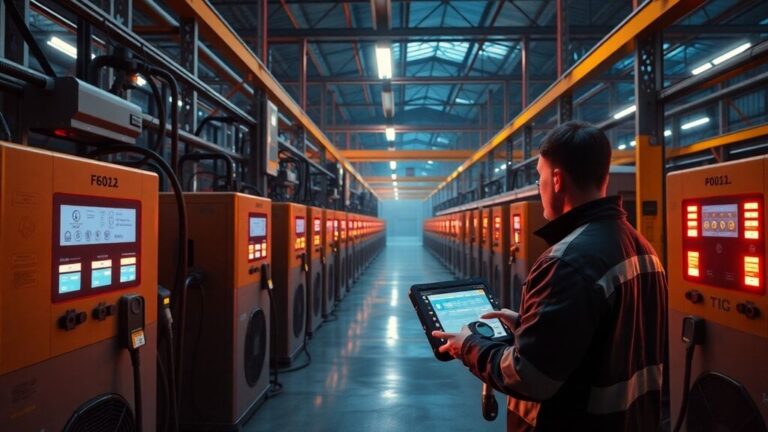





















Readiness and Environment Setup
Thermal runaway prevention starts long before a battery meets its enclosure. For home and commercial and industrial energy storage systems (ESS), the most reliable path is a standards-aligned design that minimizes the probability of a cell entering runaway and prevents propagation if a fault occurs. In 2026, the core compliance backbone in the United States remains UL 9540 for system-level certification, UL 9540A for fire and propagation test methodology, UL 1973 for stationary battery safety, NFPA 855 for installation, and the National Electrical Code (NEC) for electrical integration. Your Authority Having Jurisdiction (AHJ) and utility interconnection rules complete the picture. Aligning early with these frameworks reduces permitting cycles, insurance friction, and field retrofit risk—key drivers of ROI for decision-makers.
Chemistry selection is the highest-leverage design decision. For stationary applications, especially indoor or near-occupied spaces, LiFePO4 (LFP) remains the favored choice due to its higher thermal stability and lower oxygen release compared to many nickel-rich chemistries like NMC/NCA. That does not eliminate risk—every lithium-ion chemistry can experience thermal runaway under abuse—but LFP shifts the odds in your favor and supports a propagation-resistant architecture at lower cost and complexity. In practice, start your lithium ion battery thermal runaway prevention strategy by selecting LFP cells tested to UL 1973, with robust venting mechanisms and documented abuse test data.
Translating standards into a buildable environment requires a site readiness checklist:
- Confirm compliance pathway: UL 9540 at the system level, supported by UL 9540A test reports tailored to your exact module and cabinet construction.
- Engage the AHJ early with a documented UL 9540A strategy and preliminary one-line diagrams. This minimizes redesign cycles.
- Map NFPA 855 siting essentials: separation from exposures, fire-resistance of rooms/enclosures, detection, ventilation, and suppression. Do not rely on generic distances—use your UL 9540A results to justify the installation narrative.
- Establish ambient envelope targets: residential garages vs. C&I mechanical rooms have different heat loads, ventilation allowances, and hazard controls.
- Select an inverter/PCS certified to UL 1741 and integrated with a certified Battery Management System (BMS), ensuring coordinated protective tripping and derating.
A Step-by-Step Prevention Framework
1) Cell and Module Selection (LiFePO4 Battery Safety First)
- Choose LFP cells tested to UL 1973 and UN 38.3, with supplier abuse data (nail penetration, overcharge, external short) that demonstrates non-propagation tendencies.
- Insist on a supplier quality plan: lot-level certificates of analysis (capacity, impedance, OCV), statistical matching for modules, and traceability down to batch numbers.
- Prefer cylindrical or prismatic cells with designed vent paths; ensure mechanical features guide gases away from adjacent cells.
- Validate aging behavior: run accelerated life tests (temperature cycling, calendar aging) to map impedance growth and early gas generation; feed these results into BMS thresholds.
2) Pack Layout, Spacing, and Propagation Control
- Inter-cell spacing: maintain consistent gaps that account for expected swelling and thermal expansion. A few millimeters may suffice in low-power residential packs; C&I cabinets often require larger gaps plus thermal barriers to hinder heat conduction.
- Compartmentalization: subdivide modules so a single failure is sealed and thermally isolated. Use fire-resistant partitions between modules and between stacks in C&I cabinets.
- Electrical segmentation: implement cell- or group-level fusing so fault currents are limited. Busbars should be sized to limit I2R heating and insulated to prevent tracking during condensate events.
- Vent paths: design predictable gas and flame egress routes that do not impinge on neighboring modules. Direct flow to safe zones or vent plenums; avoid dead volumes where gases can pool.
- Materials: deploy high-temperature barriers such as mica sheets, ceramic fiber papers, or aerogel blankets; add intumescent layers at known hot zones (busbar joints, contactors).
3) Battery Thermal Management (BTM) and Heat Rejection
- Control temperature proactively: for LFP, target 15–35°C as the high-reliability band. Outside this, command automatic derating of charge, then discharge.
- Cooling topology:
- Residential: ducted air with temperature uniformity checks and easy-to-service filters.
- C&I: liquid cooling (glycol loops) for higher power densities; redundant pumps and flow sensors; corrosion controls and dielectric isolation from electrical compartments.
- Thermal interface: ensure even contact between cells and heat spreaders; avoid thick potting that traps heat without a reliable conduction path.
- Edge cases: implement preheating for sub-freezing charging and a “safe idle” state when high ambient temperatures coincide with high state-of-charge (SOC), a known risk combination for many chemistries.
4) BMS Safety Algorithms and Derating
BMS safety algorithms are the brain of lithium ion battery thermal runaway prevention. Good BMS design prioritizes early detection, graceful power derating, and hard shutoff only when necessary.
- Sensing:
- Temperature: at least one sensor per small cell group; more in high-current strings and near end cells. Monitor coolant inlet/outlet and cabinet ambient.
- Voltage: per-cell or per-parallel-group measurements with redundancy for critical strings.
- Current: precision shunts or Hall sensors with fault detection.
- Isolation: continuous insulation monitoring to detect ground faults.
- Estimation:
- SOC, SOH, and State of Temperature (SOT) with model-based observers. Reconcile against open-circuit voltage at rest to catch drift.
- Protection hierarchy:
- Pre-alarm: mild deviations trigger data logging, operator notifications, and automated checks (fan speeds, valve positions).
- Derating: reduce charge current first, then discharge power with a linear or exponential slope as temperature approaches thresholds.
- Containment: open contactors on cells/modules crossing hard limits; trigger isolation and ventilation.
- Emergency: full system shutdown and fire alarm interface if propagation risk indicators are present.
- Derating example (illustrative):
- Start charge derating at 35°C cell temperature; halve at 40°C; prohibit above manufacturer limit.
- Start discharge derating at 45°C; prohibit at the absolute high temperature limit. Always incorporate SOC-based thresholds that tighten at high SOC.
- Fault logic:
- Overcharge prevention: cross-check pack-level current and cell-level voltages; if a cell rises rapidly against tapering current, command immediate charge disable and alert.
- Thermal rate-of-rise: evaluate dT/dt, not just absolute temperature; fast rises on a single sensor are a stronger early indicator than absolute thresholds alone.
- Robust re-enablement rules: faults should require cool-down and manual validation to reset, preventing oscillatory on/off behavior.
5) Sensors and Diagnostics for Early Warning
- Off-gas detection: deploy hydrocarbon or electrolyte vapor sensors inside cabinets for early detection of venting before visible smoke. Tune alarm thresholds to avoid false positives from benign solvents.
- Smoke detection: photoelectric sensors in enclosures and rooms, tied to BMS and building fire alarm.
- Arc-fault and ground-fault: DC arc detection at string level can prevent ignition sources; insulation monitors catch evolving ground faults well before an event.
- Vibration and deformation: in C&I units, optional accelerometers and lid displacement sensors can identify mechanical impacts or swelling.
- Data strategy: sample critical channels at sufficient rates (voltage and current at hundreds of Hz for transient capture; temperature at 1–2 Hz is usually adequate). Use edge analytics to compress and trend; stream alarms and features, not raw torrents, to cloud.
6) Ventilation and Fire Suppression That Works
- Ventilation: provide mechanical exhaust paths that can clear gases from enclosures or rooms; interlock fans with gas/smoke detection and BMS alarms. For indoor C&I, consider deflagration mitigation where flammable gas concentrations are possible per your UL 9540A gas data.
- Suppression:
- Water-based systems excel at cooling and preventing propagation; they are favored by many fire codes and response agencies. Ensure coverage for cabinets and the room envelope.
- Clean agents may not remove enough heat from battery packs; use them to protect auxiliary electronics but plan for water on batteries.
- Portable extinguishers: provide Class ABC units and clear instructions for responders. Never rely on handhelds as the primary mitigation for an ESS.
- Compartment fire response: design enclosures so water application does not flood electronics; include drainage and materials compatible with water exposure.
7) Controls, Interlocks, and Safe States
- Interlocks: door switches to disable charging and reduce power when cabinets open; HVIL on service connectors to open contactors if disconnected.
- PCS coordination: inverter firmware should respect BMS commands with tight latency bounds. Use fail-safe signaling (e.g., de-energized lines command stop).
- Safe idle: define a state where the system maintains minimal SOC, low thermal load, and high monitoring vigilance during elevated risk periods (e.g., heat waves).
UL 9540A Strategy Aligned to ESS Safety
UL 9540A is not a certification; it is a standardized test method used to characterize fire behavior and thermal runaway propagation at cell, module, unit (cabinet), and installation levels. AHJs and NFPA 855 use UL 9540A results to approve siting, spacing, and mitigation. A deliberate plan saves months.
- Define objectives: prove either “no propagation” or “limited-to-one-module” behavior under worst-case initiation. If complete non-propagation is not feasible, document that heat release and gas production remain within manageable limits for your suppression and ventilation design.
- Engineer for the test:
- Build the test unit exactly as you will ship it: same cells, spacings, barriers, vent paths, and BMS firmware revisions. Small deviations invite extra rounds.
- Add instrumentation ports and view windows without changing core thermal behavior.
- Data to capture and use:
- Peak and cumulative heat release rates, maximum temperatures, flame durations, and distances.
- Gas composition and volumes; use this to size ventilation and evaluate deflagration hazards.
- Propagation boundaries: which modules failed, how far, and how quickly.
- Iterative design loop:
- Conduct module-level tests with candidate barrier materials and spacings.
- Update the design and retest to reach a stable non-propagation configuration.
- Scale to unit-level, validating vent paths and cabinet segmentation.
- Use installation-level analysis to justify room spacing, ventilation rates, and suppression with the AHJ.
- Budget and schedule: plan for mid-five to low-six-figure costs and multi-month lead times with test labs. Parallelize engineering builds and pre-tests to compress timelines. Each redesign/test loop adds weeks; invest in thermal modeling up front to reduce iterations.
- Documentation: present a cohesive “ESS safety” package—UL 9540A reports, UL 9540 certification plan, BMS safety algorithms description, ventilation/suppression calculations, and an emergency response guide tailored to your product.
Commissioning, Diagnostics, and Runbooks
A disciplined operational start-up is as important as the design. Commissioning validates that lithium ion battery thermal runaway prevention measures function as intended.
- Pre-energization checks:
- Visual inspection: verify spacings, barriers, wire routing, and fastener torques; confirm no shipping damage or swelling.
- Electrical: insulation resistance measurements, polarity checks, and contactor open/close tests with continuity verification.
- Thermal: confirm sensor placement, log idle temperature stability, and verify fan/pump actuation.
- Communications: PCS-BMS handshake, EMS commands, alarm routing to site fire alarm and remote monitoring.
- Functional tests:
- Low-current charge/discharge cycles to validate SOC estimation and derating responses.
- Simulated sensor faults (disconnects/shorts) to confirm fail-safe behavior.
- Gas/smoke detector tests integrated with ventilation and alarm annunciation.
- Data baselining:
- Establish reference impedance, temperature gradients at nominal load, and acoustic/vibration signatures where applicable.
- Store a “golden” trend set for future comparisons to detect drift.
Runbooks translate alarms into actions: - Alarm classes:
- Advisory: trend deviations (slow impedance rise, mild thermal gradients). Action: schedule inspection and tighten derating temporarily.
- Waarschuwing: detectie van uitgasen, hoge dT/dt, detectie van aardfouten. Actie: automatische uitschakeling van de lading, vermindering van de ontlading, technicus binnen gedefinieerde SLA sturen.
- Kritiek: herhaalde uitgasen, rookdetectie, runaway-indicatoren, abnormale druk in de behuizing. Actie: open contactoren, ventilatie/suppressie activeren, brandweer op de hoogte stellen volgens het noodplan.
- Escalatie tijdlijnen:
- Residentieel: op afstand triage binnen enkele minuten; instructies voor huiseigenaren om afstand te houden, het resetten van schakelaars te vermijden; veldbezoek de volgende werkdag, tenzij kritiek.
- C&I: 24/7 SOC-monitoring met een technicus op oproep; contractuele reactietijden gekoppeld aan beschikbaarheidseisen (bijv. 4 uur ter plaatse voor activa voor vraagchargebeheer).
- Cybersecurity en firmware:
- Gebruik ondertekende firmware en een gefaseerd uitrolproces. Veiligheidskenmerken (derating, uitschakelgedrag) moeten offline testbaar en terugdraaibaar zijn.
- Houd een wijzigingslogboek bij dat firmwareversies in kaart brengt met UL 9540A-configuraties; grote veiligheidswijzigingen kunnen her-testen of technische rechtvaardiging vereisen.
Probleemoplossing en veldscenario's
Zelfs robuuste ontwerpen zien anomalieën. Een gestructureerde diagnostische aanpak behoudt de veiligheid en beschikbaarheid van ESS.
- Glocaliseerde hotspots:
- Symptoom: één sensor stijgt 5–10°C boven peers onder gelijke belasting.
- Acties: controleer de kalibratie van de sensor; controleer de integriteit van de thermische interface; inspecteer de koppelingsklemmen. Als het aanhoudt, isoleer de module en voer IR-thermografie uit. Vervang verdachte celgroepen; onderzoek naar stijging van de interne weerstand.
- Overlast door uitgasalarm:
- Symptoom: pieken tijdens het gebruik van oplosmiddelen in de buurt of onderhoudsactiviteiten.
- Acties: correleer met omgevingslogs; pas drempels aan met hysterese; voeg kruisvalidatie toe tegen temperatuur- en rooksensoren om valse positieven te verminderen zonder echte gebeurtenissen te desensibiliseren.
- Aardfoutalarm zonder zichtbaar probleem:
- Symptoom: intermitterende isolatiemonitor trips.
- Acties: inspecteer kabeldoorvoeren, condensatiepaden en koelvloeistoflekkages. Droog en dicht de behuizingen opnieuw af. Overweeg droogmiddelen of gecontroleerde ontvochtiging in problematische klimaten.
- Contactoren lassen of chatter:
- Symptoom: vertraagde opening, gebeurtenislogs tonen snelle cycli.
- Acties: controleer BMS-logica voor oscillatoire commando's; voeg minimale uitschakeltijden toe; inspecteer op inductieve kickonderdrukking; vervang contactoren met geschikte DC-classificaties en geverifieerd boogbeheer.
- Ventilator- of pompstoringen:
- Symptoom: temperatuurstijging onder gematigde belastingen.
- Acties: overschakelen naar redundante eenheden waar beschikbaar; derating activeren; vervangingen plannen. Overweeg voorspellend onderhoud door de stroomafname en vibratietrends van roterende apparatuur te monitoren.
Een root-cause framework helpt om oplossingen te institutionalizeren: - Verzamel gesynchroniseerde logs (BMS, PCS, EMS, gebouwalarmen).
- Reproduceer in een gecontroleerde omgeving indien veilig.
- Pas 5-Whys en FMEA-updates toe; voer leerervaringen in in ontwerp en firmware.
- Als een veiligheidslimiet werd benaderd, herbeoordeel UL 9540A-veronderstellingen; werk de AHJ-documentatie bij als mitigaties veranderen.
Prestaties, ROI en continue optimalisatie
Preventie van thermische runaway betaalt zichzelf terug door het versnellen van vergunningen, het verlagen van verzekeringskosten, het vermijden van verloren inkomsten door ongeplande uitval en het beschermen van de merkreputatie. Behandel veiligheid als een beheerd prestatiegebied met duidelijke KPI's.
- Belangrijke metrics:
- Near-miss percentage: tel en categoriseer pre-alarmen en waarschuwingen per MWh per jaar. Een stijgende trend signaleert ontwerp- of operationele afwijkingen.
- Propagatiebestendigheid: resultaat van interne misbruiktests (module- of eenheidsniveau). Richt je op niet-propagatie over verse en verouderde monsters.
- Beschikbaarheid: percentage uptime aangepast voor veiligheidsgerelateerde derating-gebeurtenissen; houd MWh bij die zijn beperkt vanwege thermische limieten om koelingsupgrades te begeleiden.
- Vergunningcyclus tijd: weken van indiening van het plan tot goedkeuring; verbeterd door schone UL 9540A-narratieven en AHJ-pre-engagement.
- Verzekeringsfeedback: premieverschillen gekoppeld aan gedocumenteerde ESS-veiligheidscontroles en testverslagen.
- Optimalisatiehefbomen:
- Algoritme-afstemming: pas deratinghellingen aan op basis van seizoen en klimaat; herstel veilig capaciteit tijdens koele nachten.
- Thermische upgrades: voeg baffles toe, verbeter ventilatorcurves of verbeter de koelvloeistofverdeling op basis van hotspotkaarten; kleine wijzigingen kunnen betekenisvolle energie terugwinnen zonder veiligheid op te offeren.
- Voorspellend onderhoud: machine learning-modellen op impedantie en temperatuurvariatie kunnen modulevervangingen voorspellen voordat alarmen afgaan, waardoor capaciteit behouden blijft en stilstand wordt verminderd.
- Componentlevenscyclus: kwalificeer proactief tweede-bron sensoren en contactoren; houd veiligheidskritische onderdelen op voorraad om de gecertificeerde configuratie te behouden.
- Governance:
- Veiligheidsreviewcommissie: cross-functioneel team beoordeelt alarmeringen, veldincidenten en firmwarewijzigingen maandelijks.
- Configuratiebeheer: vergrendel de stuklijst en firmware-hashes gekoppeld aan UL 9540A-rapporten; documenteer elke delta met technische rechtvaardiging.
- Training: verfris technici over runbooks, PPE en noodcoördinatie met lokale brandweerkorpsen minstens jaarlijks.
Residentiële vs. C&I Playbooks
Verschillende schalen en contexten vereisen op maat gemaakte checklists terwijl dezelfde veiligheidsprincipes worden gehandhaafd.
Residentieel ESS Playbook
- Chemie en ontwerp:
- Kies LFP met UL 9540-systeemcertificering; geef de voorkeur aan wand- of vloerkasten met geïntegreerde barrières en een gedocumenteerd UL 9540A-rapport.
- Houd afstand van brandbare materialen volgens de instructies van de fabrikant; vermijd besloten kasten tenzij specifiek gecertificeerd voor dergelijke installaties.
- Installatie en omgeving:
- Garage- of buitenlocaties met milde omgevingsschommelingen hebben de voorkeur; zorg voor schaduw en basisventilatie om warmteopbouw te voorkomen.
- Koppel rookdetectie aan het huissysteem; leid BMS-kritieke alarmen naar een 24/7-monitoringscentrum.
- BMS en controles:
- Conservatieve derating bij hoge omgevingstemperaturen en hoge SOC; prioriteer batterijlevensduur boven piekvermogen.
- Auto-pauzeer lading tijdens hittegolven wanneer kasttemperaturen hoog blijven; hervat wanneer veilige idle-omstandigheden zijn bereikt.
- Onderhoud:
- Kwartaalvisuele controles (eigenaar of technicus): stoffilters, afstanden, duidelijke schade.
- Jaarlijkse service: firmware-update, impedantietrendreview, ventilatortest en verificatie van alarmpaden naar de monitorprovider.
- Noodplan:
- Duidelijke instructies voor huiseigenaren: open geen behuizingen tijdens alarmen; evacueer en bel 911 als er rook wordt gedetecteerd; weet hoe je de stroom bij de hoofdvoorziening kunt isoleren als dit door hulpverleners wordt aangegeven.
C&I ESS Playbook
- Chemie en ontwerp:
- LFP-modules met geverifieerde niet-propagatie of beperkte propagatie onder UL 9540A. Segmentatie op kastniveau en ontworpen ventilatiepaden zijn verplicht.
- Redundante koel- en stroompaden om de beschikbaarheid onder componentstoringen te waarborgen.
- Faciliteitsintegratie:
- NFPA 855-geïnformeerd kamontwerp: brandwerende scheidingen, mechanische ventilatie op maat van UL 9540A-gasgegevens, automatische sprinklers of waternevel.
- Gecoördineerde PCS/EMS/BMS-controles met nutsbedrijven en gebouwbeheersystemen.
- Monitoring en analytics:
- 24/7 remote ops met geautomatiseerde anomaliedetectie op dT/dt, impedantie en isolatietrends.
- Periodieke capaciteitsvalidatiecycli onder toezicht om SOC te herkalibreren en deratingdrempels te verifiëren.
- Onderhoud:
- Maandelijkse inspecties: controleer kabelterminaties, lekcontroles, filterstatus en actuator tests.
- Halfjaarlijkse volledige veiligheidsdrills met faciliteiten en lokale hulpverleners; valideer alarmrouting en suppressie-activering.
- Noodprocedures:
- On-site responskits: PPE, lockout/tagout-apparaten, thermische camera en documentatie.
- Vooraf beoordeeld responsplan met de lokale brandweer, inclusief toegang tot watervoorziening en stappen voor isolatie van kasten.
Trefwoorden-in-actie: Alles samenbrengen
- Preventie van thermische runaway bij lithium-ionbatterijen is een gelaagde strategie: chemie (geef de voorkeur aan LFP), packarchitectuur, batterijthermisch beheer, BMS-veiligheidsalgoritmen, ventilatie, suppressie en UL 9540A-ondersteunde plaatsing.
- ESS-veiligheid is meetbaar en verbeterbaar: gebruik KPI's en governance om veiligheid om te zetten in een concurrentievoordeel dat de tijd tot vergunning verkort en de uptime verhoogt.
- LiFePO4-batterijveiligheid is praktisch, niet theoretisch: geteste barrières, gecontroleerde ventilatiepaden en conservatieve algoritmen creëren voorspelbare uitkomsten onder stress.
- UL 9540A is uw onderhandelingstool met AHJ's: een duidelijk testplan en verdedigbare gegevens stroomlijnen goedkeuringen.
- BMS-veiligheidsalgoritmen vertalen technische intentie naar veldgedrag: vroeg en vaak derating kost minder dan het verhelpen van een incident.
- Batterijthermisch beheer houdt cellen in hun comfortzone: het is een prestatiekenmerk en een veiligheidsvereiste, geen bijzaak.
Door preventie te beschouwen als een levenscyclus - van leveranciersselectie en ontwerp tot inbedrijfstelling, operaties en continue verbetering - creëer je ESS-activa die veiliger, gemakkelijker te verzekeren, sneller te vergunnen en winstgevender zijn in gebruik.